The interactions involving viral and host components play a crucial player in virus replication and pathogenesis. Viruses preferentially target a number of certain pivotal proteins to effectively rewire host interactions for their benefit. The exploration of virus-host interactions has garnered significant attention in recent years, particularly in the context of understanding the mechanisms through which viruses manipulate host cellular machinery.
This resource advances our comprehension of these complex interactions of host protein interactors of Chandipura virus (CHPV). The integration of network analysis, structural modeling and bioinformatics tools advance our knowledge in this area and help in developing effective antiviral strategies.
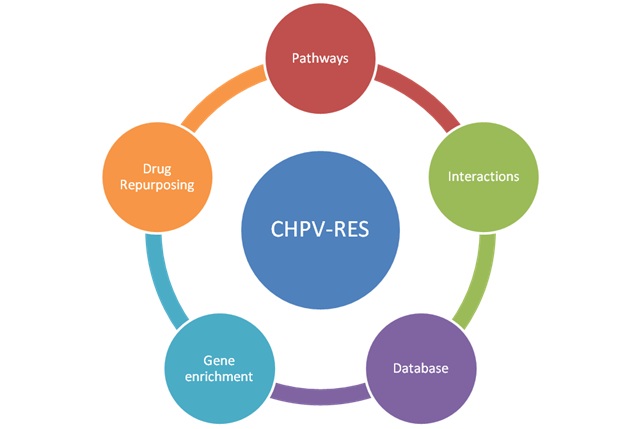
Fig. 1 Overview of CHPV-RES web portal.
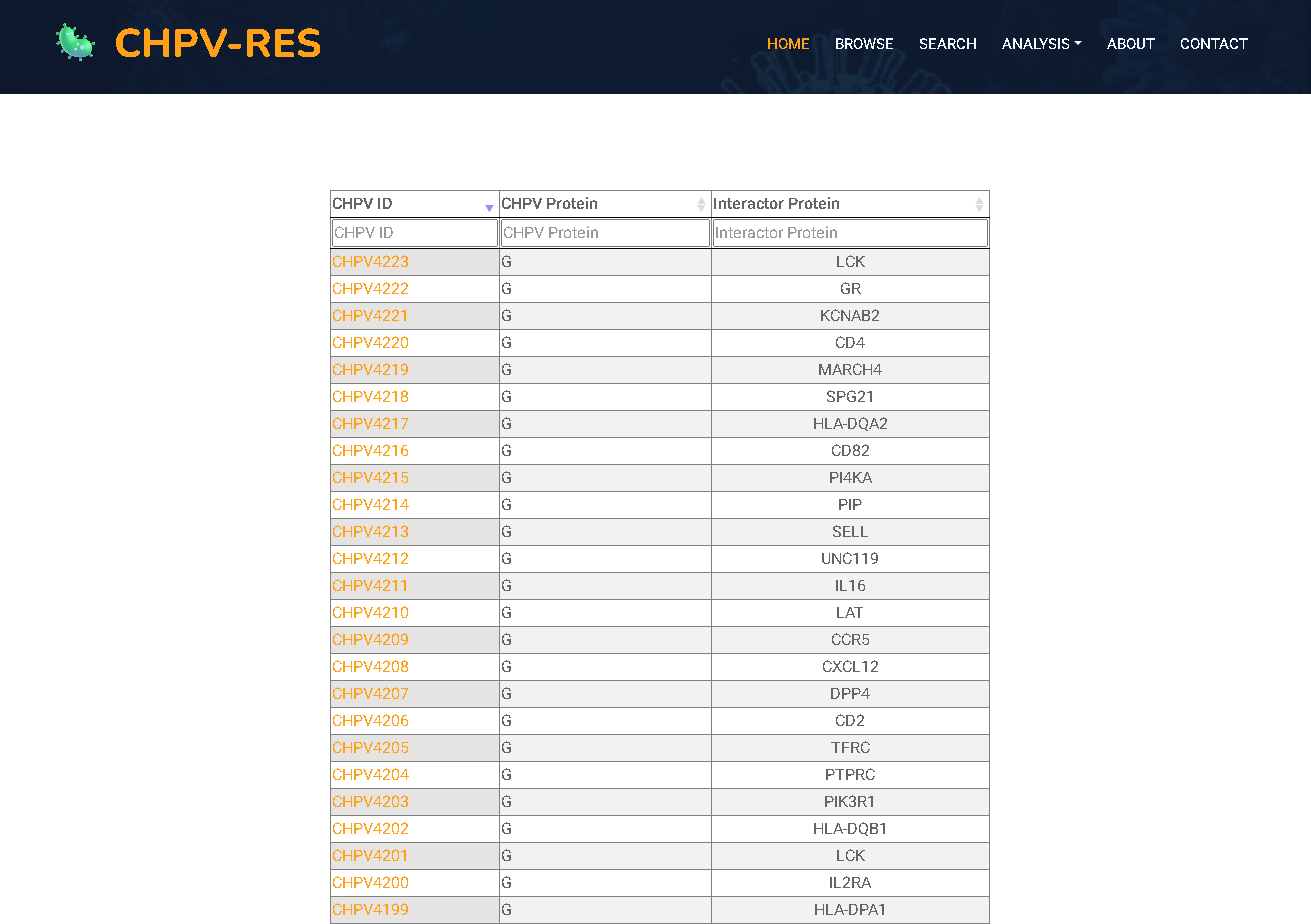
CHPV-RES contains a total of 4376 predicted human host interaction factors for N (205), P (153), M (62), G (1402), and L (2554) proteins of CHPV.Users can browse and search the database via viral and host proteins or their uniprot / NCBI gene IDs.
Fig. 2 Screenshot of CHPV-RES search output
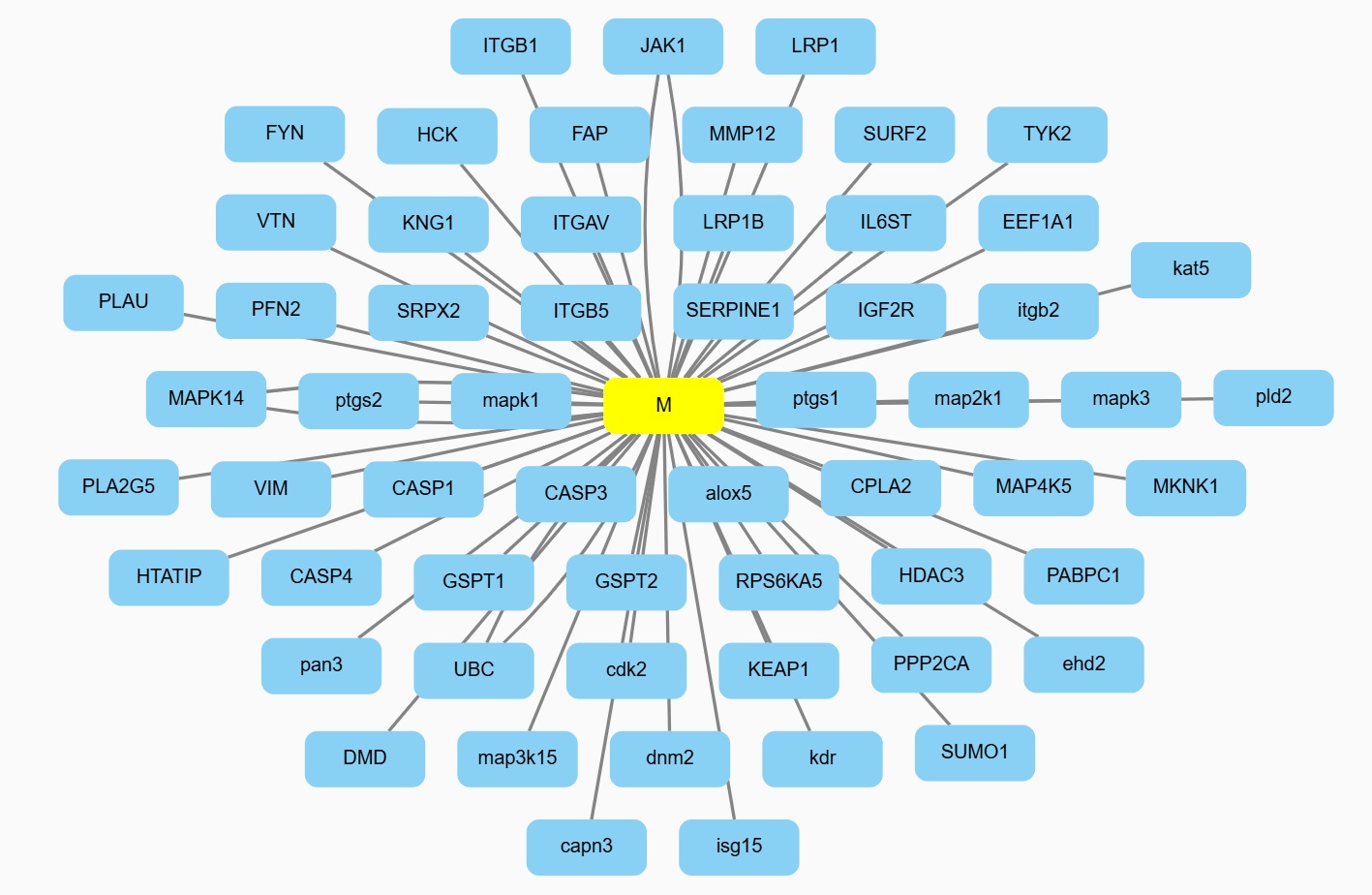
Network analysis of host factor interactions with different CHPV proteins using Cyoscape web is also provided.
Fig. 3 Schematic representation of interaction analysis for CHPV M protein
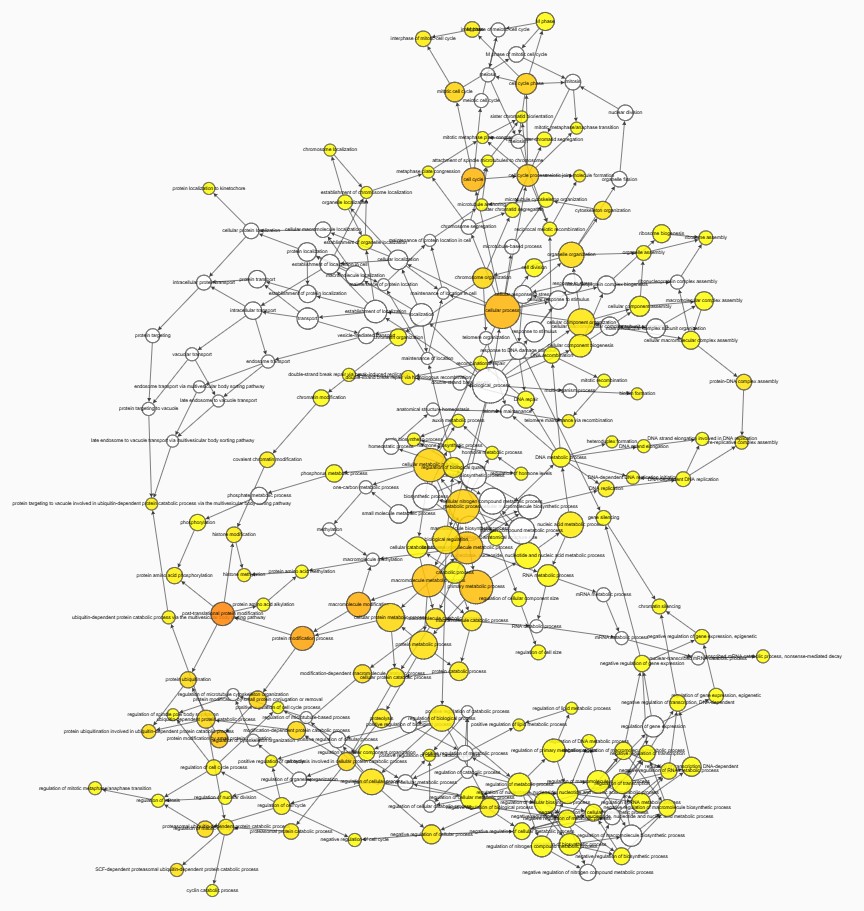
Gene Ontology (GO) analysis of host factors interacting with different viral genes using BiNGO was used to determine which GO categories are significantly overrepresented and map the predominant functional themes.
Fig. 4 GO analysis of host factors for CHPV L protein
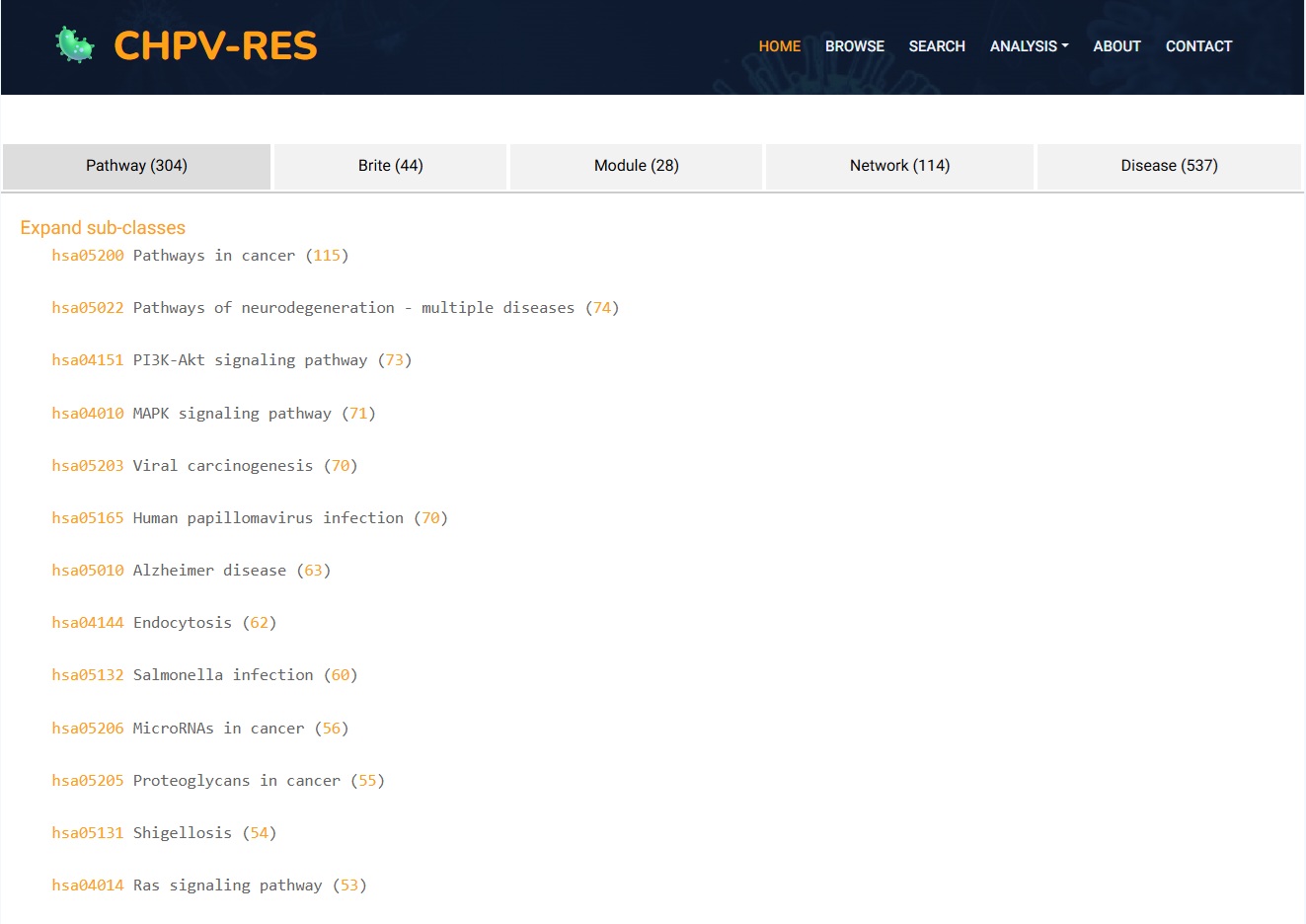
Pathway enrichment was performed using KEGG Mapper. This analysis provides functional annotation of the host factors involved in cellular pathways.
Fig. 5 Pathway enrichment analysis for CHPV G protein
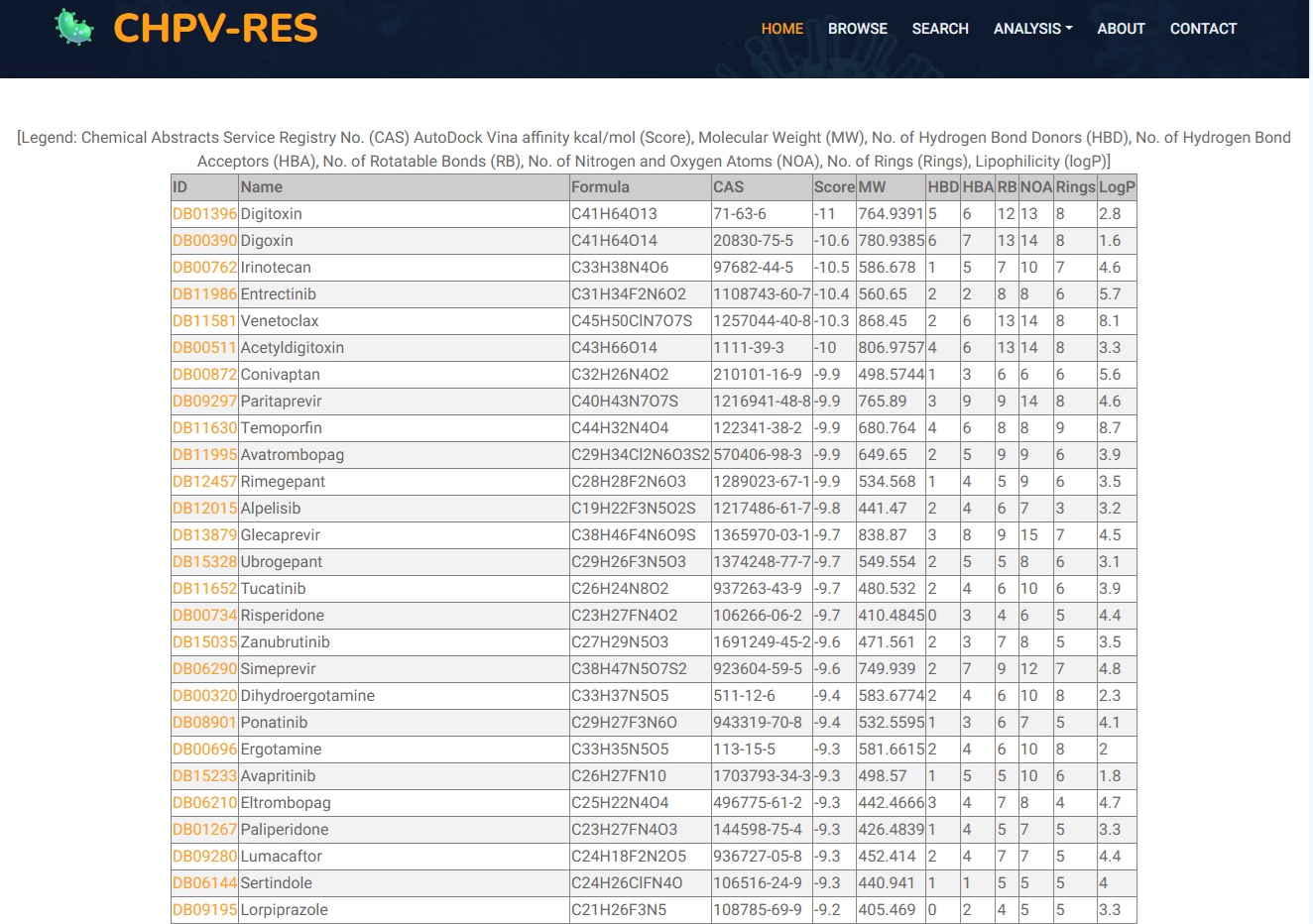
In the Drugs module, possible binding pockets on CHPV proteins were identified and virtual screening (based on docking) was used to find potential inhibitors from the existing compound databases to aid in drug repurposing.
Fig. 6 Predicted drug repurposing targeting CHPV L protein